AUSTRALIAN OPEN ALL ABILITIES DAY
Australian Open All Abilities Day is an event that was launched in partnership with the Dylan Alcott Foundation, to promote the sport of tennis and make it accessible and inclusive by providing opportunities for people of all abilities to attend the Australian Open and participate in tennis-related activities. This year’s event will take place on Tuesday, January 27th.
GROWING THE COMMUNITY
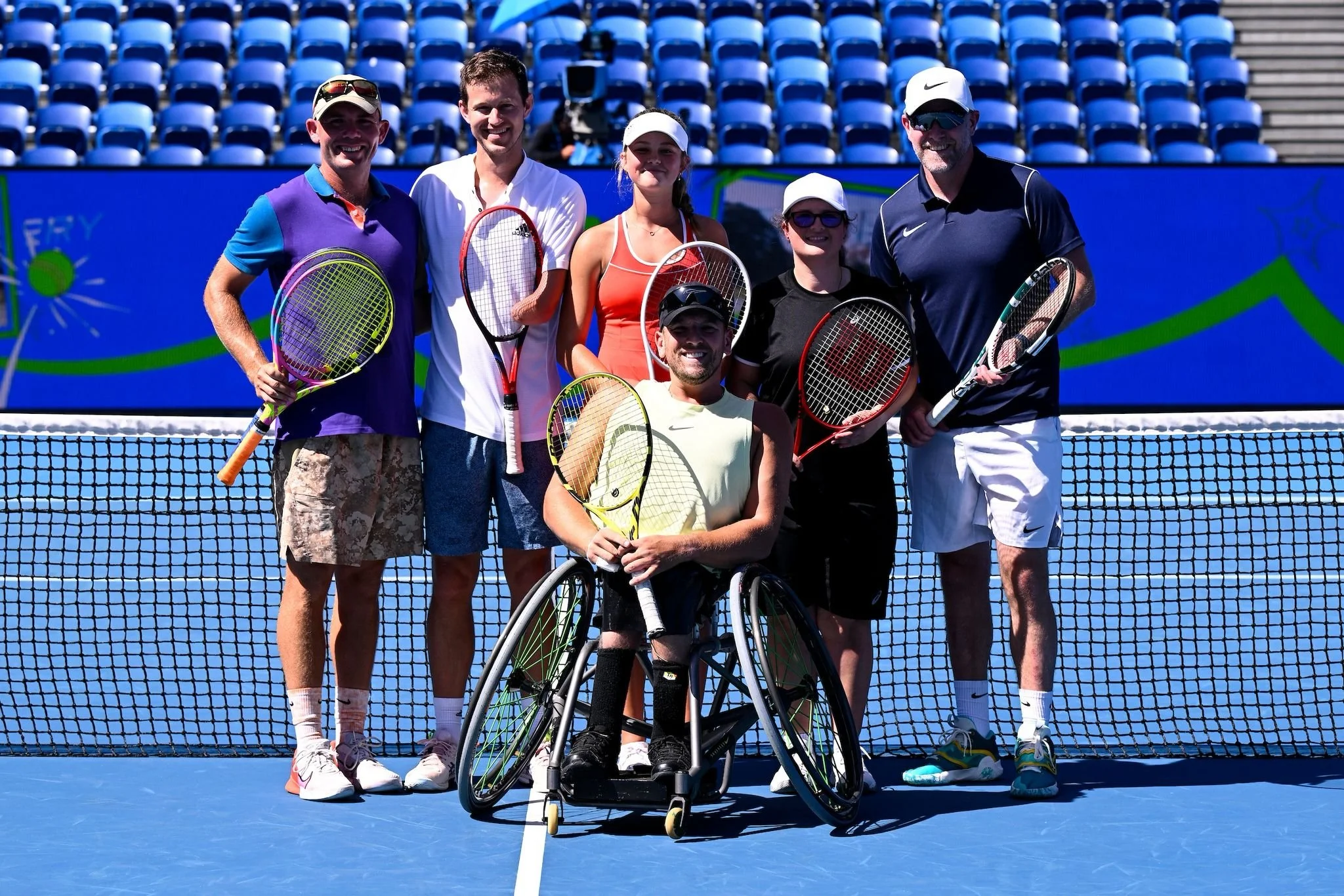
The All Abilities community or people with disabilities, is a community that we're keen to expand and connect with. We’ve worked on growing our pathways and competitive opportunities year round.
This year we've had over 80 tournaments for people with disabilities, and we have just come off the back of running an All Abilities Tennis Week. We're encouraging clubs across the country and member associations to have a focus on people with disabilities, and through education, we're trying to use social platforms to share the pathways that people can play and how inclusive the sport is.
CENTRING INCLUSION IN ALL ASPECTS
If you touch on it, that's a big part of our population, so I think organisations have taken time to really get their head around what that means for them, and so Australia has really started to create an inclusive world and things like universal design principles. At the Australian Open, from an accessibility lens, we try and think about everything possible that is going to make a person's experience better, and we do accessibility audits every year. That’s been amazing, and our team’s been super creative and innovative.
We try to make sure that every element of the day is well considered and not only people with disabilities being invited in, but also people with disabilities being part of the talent and also being showcased on the court to show what they can do. We had people who are neurodiverse, a DJ who has cerebral palsy, and we had Emma Memmer, who's one of the Wiggles, who did sign language in the ballpark with the kids.
We also had over 100 employees with disabilities at the Australian Open last year. So we made sure those employees were working front and centre involved. Listening to people with lived experience, knowing that we can always learn, we can always get better, that's kind of our mindset, helping the event to be really good from an accessibility lens.
ENGAGING CLUBS & GRASSROOTS
I'd be surprised if there were any clubs across the country that didn't have people with disabilities incorporated into them in some way. When you put a label on it, people have a bit of fear around what their perception of a person with a disability looks like, so through initiatives like All Abilities Day and All Abilities Week, and now we have Bupa coming on as a presenting and supporting partner, that's going to help us to amplify our messages and really provide the education and resources for our coaches and clubs to make sure they're not overwhelmed and understand that supporting people with disabilities might not be as scary as they think.
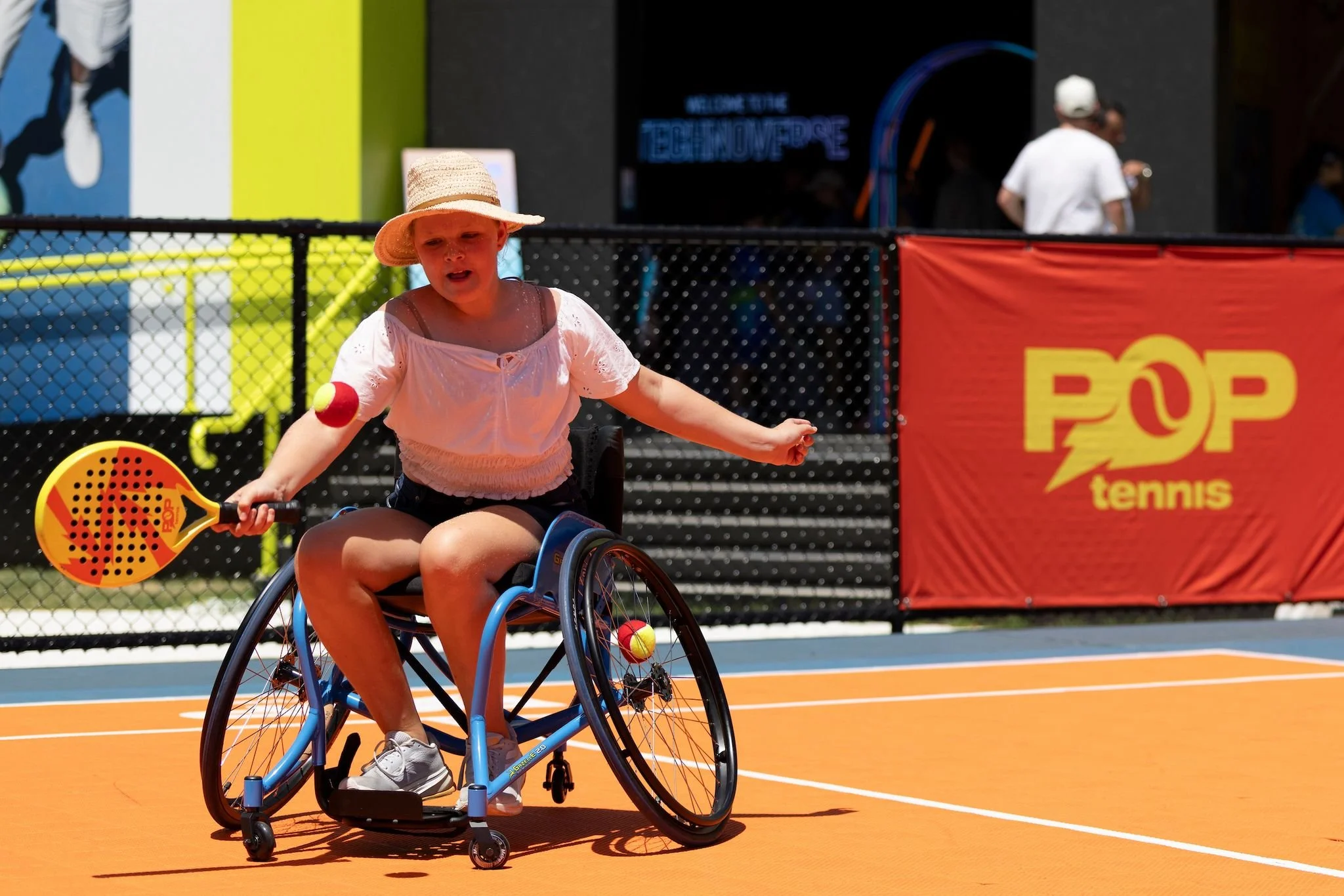
When we launched All Abilities Week, we created 15 new resources to support coaches and clubs to be more inclusive, and we are trying to provide them with what they need to be able to provide a great opportunity for players with disabilities. I think that confidence piece is an ongoing challenge and probably peer-to-peer could be the best way to go about it, where you get clubs who are doing it, and doing it well, to share with other clubs on how it's working, tips and who they got funding and support from. That's going to be even more impactful than hearing Tennis Australia or one of the states saying, this is how you should do it.
Competitive opportunities are definitely something that we've tried to showcase or to increase around the country. Over 80 tournaments this year for people with disabilities is the largest we've ever had. That's really growing our base and our pathways.

MISCONCEPTIONS AROUND DISABILITIES IN TENNIS
There's a lot of stigma around disability, for those who aren't in direct contact with people with disabilities, it's kind of this fear of the unknown. Dylan Alcott has used his platform to really change the way people think, and he's driving a shift, not only from a participation lens, but it's great to be on Channel 9, one of Australia’s major channels showcasing wheelchair tennis for the first time. It was absolutely huge for the community.
Even working at the Australian Open, our employees, we have an all abilities lead on the team, who lives with CP. There's someone else on the team who's deaf and telling their stories and highlighting what it's like to work in an organisation, the collaboration and everything you need to consider to make the workplace more accessible.
There's just so many angles of people with disabilities that you can tell so many stories, from a workplace perspective, from a play perspective, and then from a fan and accessibility perspective as well. So we try to highlight as much as we can.
“We’ve all got a responsibility to support all of our population, regardless of who you are, it’s on us as a sport to make sure tennis is welcoming and accessible and inclusive for everybody. This is just another part of the community that deserves to play tennis. All organisations and sports should be thinking this way. ”
AO ALL ABILITIES DAY MOMENTS
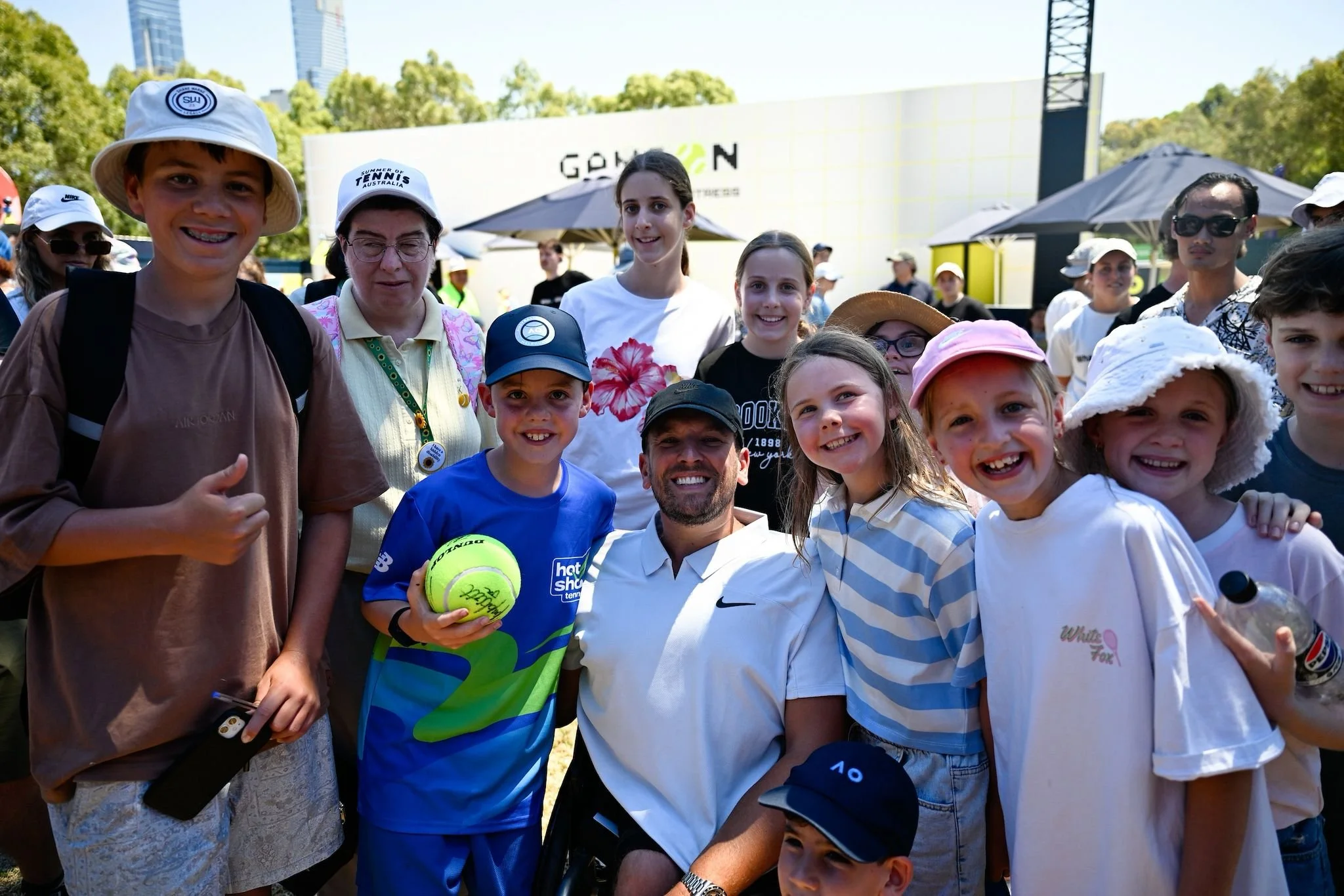
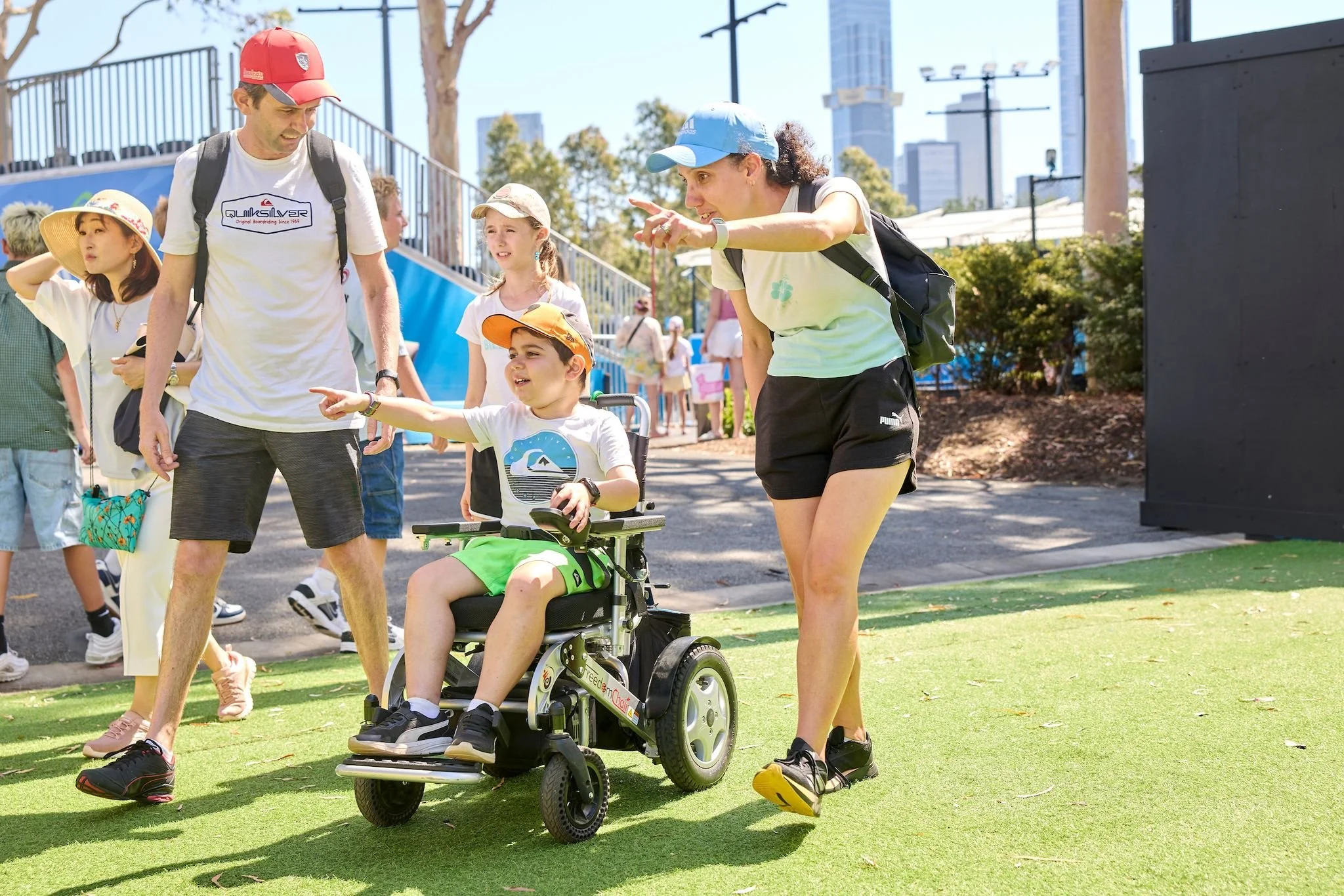
We had over 500 people with disabilities and their families coming into the kids zone. That was joyous to start the day, it was a great environment. We had our sensory room available for people who needed it. That was really beautiful to see, kids and families enjoying and coming into the AO in kind of a quiet and safe space, a good entry into what can be an overcrowded and overwhelming environment.
It was kind of the perfect way in. We had opportunities for people to have hits on the courts, opening them up for different community groups throughout the day.
What’s surprising is when you call out a day for a community, how many people actually show up. I don't think I've ever seen as many people with disabilities in one spot at a sporting event at the first All Abilities Day. Since then it's just grown and grown in terms of community engagement.
I think we gave out over 3,000 community tickets at the Australian Open last year and worked with over 130 organisations to try and get more people aware and attending. While building out the programme of activities on the day, we tried to ensure our talent and entertainment had lived experience as much as possible. It’s been such a great day and the feedback from the community has been really impactful.

LEVELLING THE FIELD
It's about ensuring people can play the way they want to play. They're not saying you need a disability-specific programme. If someone wants to play in the mainstream, they should be able to play in the mainstream. It's about people playing the way they want to play and creating the spaces for that to happen and the pathways for that to happen, and then it's just about choice. It's up to them, once we've done that.